Your business requires routine sanitation scheduled according to potential hazards, food processing capacity, allergen concerns, and regulatory checks, combined with verification documentation supporting HACCP compliance, inspection results, and government health requirements. The following sections describe essential sanitation program components.
Essential Summary
- Sanitation professionals from Brampton assist restaurants, grocery departments, commissaries, warehouses, bakeries, schools, mobile vendors, and allergen-sensitive operations.
- Cross-contamination elimination is maintained by disinfecting frequently contacted areas, food-contact equipment, kitchens, floors, drains, restrooms, and storage areas with compartmentalized approaches.
- Recording of finalization through samples, inspections, and correction logs confirms trained providers have checked proper chemical concentration, alignment, and contact time.
- Threat, throughput, transitions, accidents, and regulations should direct sanitation plans, with daily, periodic, and periodic duties designated by zone.
- Emphasize contractors demonstrating HACCP, health regulatory knowledge, WHMIS training, coverage, references, coded instruments, and assessment-ready cleaning files.
What Brampton Facilities Require Food Safety Cleaning?
Brampton operations that deal with, maintain, prepare, package, or provide food require sanitation protocols. Implement it if your business is regulated by health reviews, food regulations, or HACCP protocols. The obligation covers food venues, break rooms, supply centers, retail departments, butcheries, seafood areas, stores, and facility food prep.
You also need compliant food safety cleaning in storage facilities, food production centers, refrigerated locations, bakery retailers, school meal programs, event venues, and food distribution hubs. Mobile and temporary operations count too, including catering trucks, festival vendors, and pop-up food booths. If your staff handle ingredients, section prepared foods, heat finished items, or keep allergens stored, your facility needs written cleaning standards. In Brampton, cleanliness isn't elective; it's part of regulatory, business, and safety compliance.
What Do Brampton Cleaning Experts Clean?
You need cleaning experts who disinfect frequently contacted areas, kitchens, floor surfaces, and bathrooms to comply with food safety and health regulations. They target these areas because they pose the greatest danger for cross-contamination, slipping risks, and hygiene violations.
When you understand what they clean, you can ensure your operation's cleaning procedures satisfy compliance and operational standards.
Prioritizing High-Touch Surface Sanitizing
create a disinfection plan
ensure effective sterilization
Food Prep Areas, Flooring, and Sanitary Facilities
Professional cleaners in Brampton concentrate on kitchens, floors, and restrooms given that each location involves distinct contamination control, slip-and-fall, and public health requirements. In industrial kitchens, you need grease removal from cooking stations, appliance surfaces, drain systems, preparation areas, and backsplashes to reduce bacterial growth and pest activity.
Documented floor maintenance is also provided as part of the service.
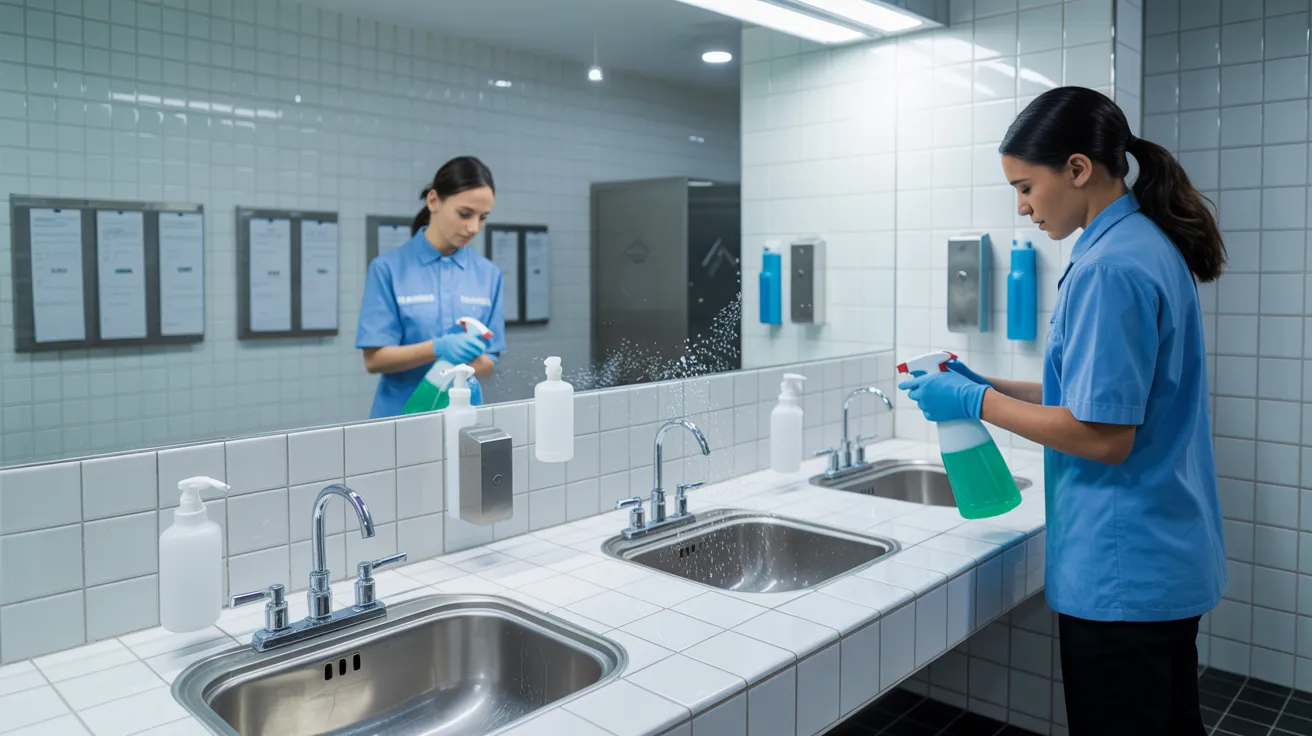
Restroom sanitation requires decontaminating touchpoints, fixtures, partitions, dispensers, and waste containers, replacing items and managing smells. They also service restaurant moprooms, where chemical storage, sink hygiene, and drainage conditions can affect sanitation compliance and staff safety daily.
The Importance of Food Safety Cleaning in Brampton
Brampton operations require food-safe cleaning standards to meet health code requirements and pass audits. You also reduce cross-contamination by cleaning and sanitizing food-contact surfaces, equipment, and high-touch areas correctly. Most importantly, you help protect community wellness by reducing the chance of food poisoning in your establishment.
Health Code Compliance
Because Brampton food establishments operate under strict public health standards, food safety cleaning directly determines your capacity to satisfy health code requirements, safeguard customers, and sidestep enforcement action. You must maintain clean important resource food preparation areas, verifiable cleaning logs, appropriate product handling, and documented employee protocols that correspond to municipal and provincial inspection expectations.
Should your cleaning standards decline, you expose yourself to notices, corrective directives, brand damage, and potential service disruption during subsequent audits or enforcement reviews.
Cross-Contamination Prevention
Following health code standards depends on your ability to prevent cross-contamination in daily food handling and cleaning. You must separate raw ingredients from ready-to-eat foods, disinfect work areas after use, and store chemicals away from food-contact items. Well-defined guidelines decrease contamination chances and promote steady regulatory adherence.
Implementing allergen segregation helps keep priority allergens from contacting communal work zones, bins, or devices. Deploy dedicated cutting boards, color-coded tools, and clear tool marking so workers don't combine products while preparing or distributing. Require handwashing after handling fresh proteins, aquatic items, egg products, or allergen materials. Refresh cleaning cloths often, and verify sanitizer strength with test strips. When your team learns these guidelines per shift, you create a cleaner, safer operation that meets Brampton's food safety expectations regularly.
Community Health Protection
If proper sanitation deteriorates, you don't merely face potential inspection issues—you boost the probability of foodborne illness affecting customers, staff, and the broader Brampton region. You also weaken your role in safeguarding community wellness, especially in busy food facilities where contamination can spread quickly through surfaces, equipment, and touchpoints.
You depend on sanitation protocols that remove soils, effectively sanitize, and ensure effectiveness. This involves maintaining exposure times, utilizing authorized sanitizers, maintaining records, and coaching staff to meet health-unit expectations. These initiatives promote disease prevention by reducing microbes before affecting food surfaces or hands. In Brampton, robust sanitation shields vulnerable populations, curtails outbreak likelihood, and demonstrates accountability. When you maintain standards, you go beyond regulations—you substantially reduce risk and advance safer food handling throughout the city.
How Can Cleaning Practices Ensure Food Safety Compliance?
Maintaining comprehensive cleaning schedules supports food safety compliance by lowering contamination exposure, preventing pathogen multiplication, and keeping your facility meeting sanitation requirements under HACCP-based programs and public health regulations. You ensure that food-contact surfaces are visibly clean and microbiologically controlled, enabling documented preventive controls and inspection readiness.
Cleaning strategies additionally bolster allergen prevention by clearing residues that can provoke undeclared allergen exposure.
How Should You Schedule Commercial Cleaning Services?
Schedules for cleaning are most successful when developed based on risk, production volume, and regulatory requirements instead of just a set calendar.
plan cleaning right prior to and following for optimal event turnaround.
Finding Quality Brampton Cleaning Experts: A Guide
Begin by evaluating providers based on sanitation compliance standards—not solely on budget. You should confirm that each organization comprehends CFIA, public health, and HACCP-aligned expectations applicable to your facility. Request proof of insurance, WHMIS compliance, staff training documentation, and oversight procedures. Assess whether technicians recognize cross-contamination hazards, chemical handling protocols, and verifiable sanitation records.
You must also evaluate business consistency and accountability. Seek references from Brampton food companies, then assess response times, corrective-action procedures, and communication standards. Ensure the company enables supplier checks and can provide inspection-compliant records when authorities or third parties demand verification. Verify equipment care, colour-coded tools are deployed correctly, and site-specific hazards are understood. A reputable service protects compliance, product safety, and your brand reputation.
What's covered in a Food Safety Cleaning Plan?
Develop a written plan that makes clear every sanitation responsibility, standard, and task before production begins. You should outline cleaning schedules, authorized chemicals, concentration levels, contact duration, implements, and validation techniques for each zone, surface, and piece of equipment. Include pre-operational inspections, corrective actions, and employee training requirements.
Your plan should also cover cross-contamination prevention, waste disposal, pest management measures, and scheduled documentation for bathrooms, drainage, ground surfaces, and food-handling zones. Clarify how you'll separate raw and ready-to-eat processes, help with ingredient tracking, and maintain accurate allergen labeling through validated cleaning between product changes. You should establish accountability, preserve signed records, and check results against regulatory standards, HACCP controls, and customer requirements. When gaps appear, revise procedures immediately and re-educate staff.
Frequently Posed Questions
Can sanitation providers support overnight shifts in Brampton properties?
Yes, you can arrange sanitation coverage to accommodate overnight shifts in Brampton facilities. You'll arrange nighttime cleaning around production windows, security measures, and personnel needs. Services generally outline overnight procedures to reduce disruption, maintain compliance, and record finished work. You should verify arrival timeframes, oversight, access protocols, and disposal methods before service begins.
Do Brampton cleaning experts provide emergency spill response solutions?
Yes, you can find Brampton sanitation professionals to provide emergency spill response solutions. They handle hazard containment, assess risks, isolate affected areas, and begin swift cleanup to reduce exposure and business interruption. You should verify arrival timeframes, training certifications, PPE protocols, and waste management. If your facility must meet health or food safety regulations, select a service that records events, follows compliant sanitation standards, and enables compliance verification.
Can green disinfectants be utilized safely on food preparation areas?
Yes, eco-friendly disinfectants can be suitable for food preparation areas if you pick disinfectants approved for food contact and meeting regulatory standards. You should check contact times, concentration levels, and rinse protocols before application. Many plant-derived products reduce toxic chemical contact, but you still need demonstration of efficacy against target microorganisms. To maintain residue free surfaces, you must adhere to exact manufacturer guidelines and validate the cleaning agent adheres to relevant food safety standards.
Can sanitation programs be tailored for seasonal variations?
Without question, maintenance plans adjust easily for seasonal production changes. Revise intervals, labor allocation, chemicals, and testing procedures to fit production rhythms while sustaining compliance standards. Reduce production interruptions by timing sanitization amid equipment transitions, maximum output, and operational patterns. Additionally update written procedures, training, and environmental testing to account for periodic risks, emerging allergens, or increased soiling. Consistent reviews ensure the strategy effective.
Will commercial cleaners teach your staff on hygiene best practices?
Certainly, professional cleaning experts train your employees on hygiene protocols. You secure employee development on proper chemical use, contact times, cross-contamination prevention, machine disassembly, and documentation. They typically align instruction with HACCP, GMP, and CFIA or local public health requirements. Many execute health assessments to check standards, uncover shortcomings, and reinforce corrective actions. This enables you to copyright standard processes, pass inspections, and minimize foodborne pathogen risks every day.
Summary
Partnering with Brampton food safety and commercial cleaning experts goes beyond tidying—it guarantees your operation stays inspection-compliant and your standards remain compliant. From processing facilities to kitchens, each cleaned area and organized section lessens contamination risk and avoids costly disruptions. By scheduling maintenance on appropriate schedules and executing a comprehensive cleaning strategy, you protect staff, clients, and your reputation. In a heavily regulated sector, clean environments can't be overlooked—they're vital to proper management.